Friday, May 8, 2015

Online Summer Course: Principles and Foundations of Environmental Education

Online Summer Course: 

Principles and Foundations of Environmental Education

Join the Colorado Alliance for Environmental Education for this online course where students will explore: 
* the history and goals of EE
* develop an understanding of the professional roles and instructional methods of environmental educators
* interact with participants online.

Participants will be eligible to submit their work for CAEE's environmental educator certification program for a discount.  Available for CSM Continuing Education credit.

REGISTER BY MAY 20th!

Click HERE FOR MORE INFORMATION AND TO REGISTER!

Click here to find out about more opportunities with CAEE!


Thursday, May 7, 2015

Climate and Human Security Symposium University of Colorado at Boulder


Climate and Human Security Symposium
University of Colorado at Boulder
June 3 - 4, 2015


Please click here for the announcement for the WWHGD's Climate Symposium at The University of Colorado in Boulder, CO. In order to register for the event, please login or create an account.

The National Geospatial-Intelligence Agency (NGA) and the National Center for Atmospheric Research (NCAR), in collaboration with the Homeland Infrastructure Foundation Level Data (HIFLD) Members and the World Wide Human Geography Data (WWHGD) Working Group announce the “Climate and Human Security – Geospatial Data and Mapping” symposium at the University of Colorado at Boulder, June 3-4, 2015.  The focus of this workshop will be developing collaborative relationships across government, civil sector, academia, international partners, and non-government organizations that will identify fundamental geospatial data critical to enhancing our understanding of climate change and its implications for society within a human geography framework.

Throughout the symposium, experts in the field of climate and human security will participate in panels and facilitated discussions on Climate Change Science: The Premise, Climate Change & Global Human Security Overview, Climate Research, Climate Change Demographic and Health Impacts, and Global Climate Change-- Adaptation and Mitigation Efforts for Human Security.  The detailed agenda will follow.

Check-in is at 7:00 a.m. in the Cristol Chemistry and Biochemistry Bldg,  Rm. Chem 140 University of CO at Boulder.


Interested in participating in a Science Fair Survey?

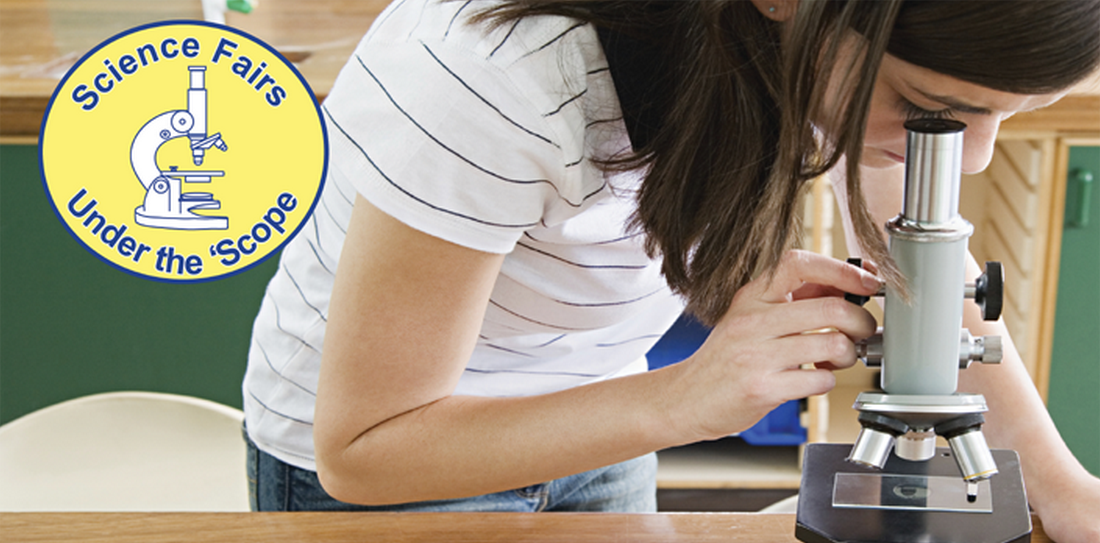
Science Fairs Under the 'Scope


Science fairs have been around for over 60 years. In the U.S., schools in over 47 states have offered science fairs reaching students as young as 9 and 10 years old, and there are many regional science fairs. We know science fairs have their critics, but they also have devoted fans. The trouble is, there is no real evidence to show what kids learn from science fairs and whether they are worth the cost. Maybe they really can boost kids’ interest in science and their ability to investigate interesting questions, but maybe not. And we should know the answer, especially now, because the need to strengthen our kids’ science and engineering skills has never been greater.

We’re calling a science fair any occasion when a teacher (a) has students answer a question or solve an engineering challenge of their own choosing, (b) has students present their work to others, and (c) has projects judged or assessed. Science fairs can happen within one classroom, across a grade, or a whole school; judging could be done by teachers or volunteers; and there do not need to be winners or prizes.

If you run a science fair at a 6-8 middle school and would like to fill out the survey, let us know! sciencefairstudy@edc.org


Wednesday, May 6, 2015

Purposeful Integration of Spatial Thinking and Geotechnologies Summer Institute 2015

Mesa County Valley School District 51
PURPOSEFUL INTEGRATION OF SPATIAL THINKING AND GEOTECHNOLOGIES
Summer Institute 2015

Department:Instructional Support
Instructor(s):Teri LeFebre & Joseph Kerski
Location:Bookcliff Middle School
Credit:
1.0 Graduate Credit(s) Colorado Mesa University
15 Renewal Clock Hours
Cost:
In District:  
$0.00 for Renewal Clock Hours 

Out of District:  Not Available  
Dates/Times
May 26, 201508:00 AM to 04:00 PM
   
May 27, 201508:00 AM to 04:00 PM

Participants will partake in a two-day course led by an Esri education manager and MCVSD 51 Curriculum Specialist on integrating spatial thinking and geotechnologies (GPS, remote sensing, Geographic Information Systems (GIS)) into district instruction, with a focus on geography, history, and STEM. Participants will identify opportunities for students to use geospatial technologies, aligned to the district unified curriculum, and supported by Colorado Academic Standards. Time will be allotted for collegial collaboration, development of a lesson supporting spatial thinking, and purposeful integration within the UCIA.


Project Learning Tree

Environmental Education for Employees of Parks, Camps,
Rec Centers, Museums, and Teachers!

Are you looking for quality
environmental education resources
for your after-school, summer, or
weekend program?


May 11, 2015 8:30 – 4:00 pm

CSU Extension
701 Court Street, Pueblo
FEE: $35
Includes activity guidebook.

At PLT, the goal is to teach students how to think, not what to think about complex environmental issues. Recognized as a leader in environmental education for more than 35 years, PLT enhances critical thinking, problem solving, and effective decision-making skills. PLT materials are multi-disciplinary and aligned with state and national education standards.

Ninety-six multi-disciplinary activities can be found inside the PreK-8 Guide – each one tailored to specific grade levels and learning objectives. Each activity is filled with opportunities to build critical thinking skills, incorporate technology, and use differentiated instruction.

This workshop will give you the resources & understanding you need to provide quality environmental education to learners of all ages.

Register at www.colorado plt.org
Contact Shawna Crocker, scrocker@colostate.edu or 303-
278-8822 for more details.

More information may be found at www.coloradoplt.org, www.plt.org, www.csfs.colostate.edu/.

Tuesday, May 5, 2015

Lecture Coming Up!

“How An Artist Reinvented the Map” 

Presented by: Susan Schulten 

May 11th 6:30 p.m. 
University of Denver, Anderson Academic Commons, Special Events Room

More Americans came into contact with maps during World War II than in any previous moment in American history. From the elaborate and innovative inserts in National Geographic to the schematic and tactical maps that filled daily newspapers, maps were everywhere. While war has perennially driven interest in geography, World War II was different. The urgency of the war, coupled with the advent of aviation, fueled the demand not just for more but different maps. The most important innovator to step into this breach was artist Richard Edes Harrison, who drew a series of elegant and gripping images of a world at war, and in the process persuaded the public that aviation and global war really had fundamentally disrupted the nature of geography.


Sunday, May 3, 2015

DMNS Inquiry Academies for Teachers

Hi everyone:  We’re looking for folks to join the ranks of the many great teachers we’ve had for our Inquiry Academies. These teachers have found ways to cultivate their students’ sense of wonder and excitement around science that in turn have inspired and reinvigorated their teaching.
 
We still have spots left for both the 3-5 and 6-8 Academies.  If you’d like to support a fellow teacher in their professional development, please consider passing on this information and encourage them to sign up.
 
Dates and times:
 
·         Upper Elementary Inquiry Academy:   June 15th-18th, 8:00am-3:30pm;  Fall Online course (6 weeks:  Aug 30 – Oct 10th); final session: Oct 10th , 8am-3pm
 
·         Middle School Inquiry Academy June 29th – July 2nd, 8:00am-3:30pm;  Fall Online course (6 weeks:  Sep 6  – Oct 17th); final session: Oct 17th , 8am-3pm
 
Cost:   $150 registration (refunded upon completion of all course components).  Teachers completing the course also receive 3.0 continuing education credits from the Colorado School of Mines.

The DMNS Inquiry Academies allow teachers the time to immerse themselves into what it really means to teach using inquiry approaches.  Inquiry can’t be taught in an hour, it takes time to really find how it will work for you inyour situation with your students.  Unlike one-day sessions of PD, this extensive course allows you more time to talk with other teachers on what works and to get feedback on how to implement inquiry in your classroom more effectively.  The summer sessions at DMNS prepare you for approaches and activities you can use to get your students excited about science and develop skills of critical thinking.  In the fall, we’ll join up again as a group for the 6-week online course that allows you to implement what you learned over the summer with the support and feedback of your fellow participants.  We’ll then celebrate in October for the final  face-to-face session, gathering additional resources and insights for your teaching.

 
Questions? Contact Robert Payo at Robert.payo@dmns.org